Adani Solar + Battery Home Combo: Homeowners are now focusing on full energy independence, real daily solar generation, and power cut backup support instead of only panel installation or only inverter backup, and this solar plus battery combo positioning directly targets those priorities. With electricity tariffs rising and power cut issues still present in many areas, hybrid solar plus battery systems are becoming practical long-term solutions for middle-class homes planning stable electricity supply and lower monthly bills.
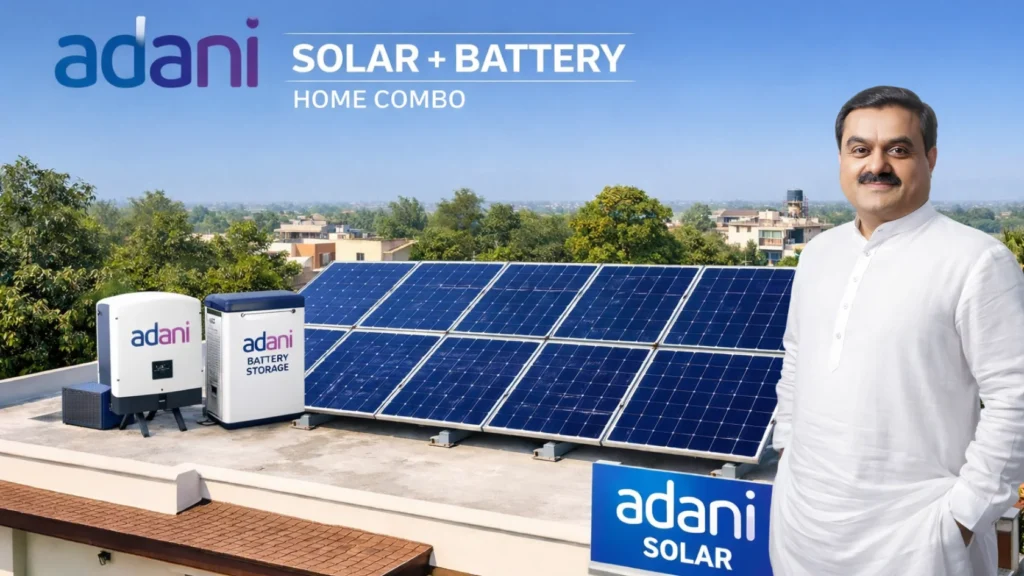
System Configuration and Hybrid Installation Setup
If designed as solar plus battery hybrid home system, total solar capacity would likely fall between 3.5kW to 4.5kW depending on daily unit generation target. The system would likely include rooftop solar panels, hybrid solar inverter, lithium battery pack, mounting structure, DC wiring, and AC safety unit. Net metering integration may be possible depending on local DISCOM policy. Required shadow-free roof area would likely stay near 300–420 square feet.
Daily Power Generation and Real Output
If system generates around 20 units daily, monthly generation could reach roughly 600 units. In Indian sunlight conditions, yearly generation could typically stay near 6,500 to 8,000 units depending on location and season. Summer months usually generate highest output while monsoon and winter may reduce output temporarily.
Battery Backup and Power Cut Support
If 8 hour backup is targeted, battery capacity would likely fall between 3kWh to 5kWh depending on load usage. This could support essential loads like fans, lights, TV, WiFi, and mobile charging during power cuts. Heavy loads like AC or geyser may reduce backup duration depending on battery size and load usage.
Electricity Bill Savings and Usage Impact
If system offsets around 20 units daily consumption, monthly bill savings could fall between ₹3,500 to ₹6,500 depending on electricity tariff and consumption pattern. Homes using heavy daytime appliances benefit more from solar usage efficiency.
EMI and Cost Structure Reality
If ₹2,999 EMI plan is offered, this would likely be part of long tenure finance plan depending on system total price and subsidy structure. Typical solar plus battery hybrid systems usually cost between ₹2.5 lakh to ₹4.5 lakh before subsidy depending on capacity and battery size. Final cost depends on subsidy eligibility and state policy.
Warranty, Maintenance and System Life
Solar panels typically include 10–12 year product warranty and 25 year performance warranty. Lithium battery warranty typically stays near 5–8 years depending on battery cycle rating. Inverter life typically stays near 8–12 years. Maintenance mainly includes panel cleaning and periodic system health monitoring.
Disclaimer: This article is for informational and expectation-based analysis. Final pricing, subsidy eligibility, generation output, battery backup performance, EMI structure, and installation configuration may vary based on location, government policy, and official company announcements. Buyers should verify details with authorised solar installation partners before installation.