Tata Nano Electric: Budget EV car buyers are now focusing on long real driving range, ultra low running cost per km, and affordable entry ownership instead of petrol expense or engine maintenance cost, and this entry electric hatchback positioning directly targets those priorities. With EV adoption growing across small towns and cities and fuel prices staying high, compact electric cars are becoming practical daily mobility solutions for middle-class and low income families planning long-term savings on fuel costs.
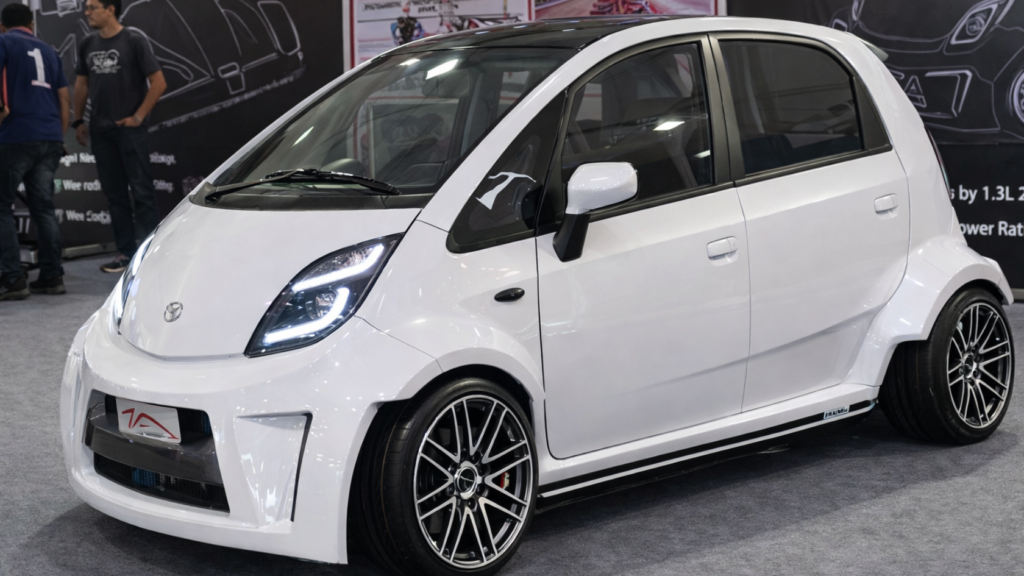
Platform Design and City Driving Practicality
If built as compact electric hatchback, design would likely focus on lightweight body structure, tight turning radius, and compact city friendly dimensions. Ground clearance would likely stay near 160–170mm supporting Indian speed breakers and rough road patches. Cabin layout would likely support 4 passenger seating with practical daily comfort. Boot space would likely remain near 150–180 litres suitable for daily grocery and small luggage usage.
Battery Pack and Real Driving Range
If 320Km certified range target is achieved, battery capacity would likely fall between 28kWh to 35kWh lithium battery pack depending on final vehicle weight and efficiency tuning. Real-world mixed driving range would likely stay near 240–280Km depending on AC usage, driving speed, and traffic conditions. For average daily driving of 30–40Km, charging frequency could remain once every 5–7 days for most users.
Motor Power and Performance Reality
If top speed near 120Km/h is targeted, motor output would likely fall between 40kW to 60kW depending on final performance tuning. This would allow smooth city acceleration and stable highway cruising capability. Torque delivery would likely focus on strong low speed acceleration for traffic driving comfort.
Charging Time and Home Charging Setup
Standard home AC charging would likely support full charging in roughly 6–8 hours depending on battery size and charger capacity. If DC fast charging support is included, 20–80 percent charging could happen in roughly 45–60 minutes depending on charger rating and battery thermal management system.
Features and Safety Technology Expectation
If positioned as budget electric hatchback, expected features could include touchscreen infotainment system, digital driver display, power windows, and smart connectivity options depending on variant. Safety hardware could include dual airbags, ABS with EBD, rear parking sensors, and reinforced safety body structure.
Price and Booking Reality
If expected price stays near ₹5.6 lakh ex-showroom, on-road pricing could fall near ₹6.2–₹7.2 lakh depending on state EV subsidy and insurance cost. Booking amount ₹21,000 would likely be part of early reservation scheme. Running cost could remain near ₹0.80–₹1.20 per km depending on electricity tariff.
Disclaimer: This article is for informational and expectation-based analysis. Final specifications, pricing, range, booking structure, and launch details may vary based on official company announcements and market conditions. Buyers should verify final details from authorised dealers before purchase decisions.