Tata Nano EV: Ultra budget car buyers are now focusing on lowest running cost per km, simple daily usability, and lowest possible EMI ownership instead of fuel mileage or engine maintenance expense, and this entry electric car positioning directly targets those priorities. With two-wheeler upgrade demand rising across small towns and cities, affordable electric cars are becoming important for families wanting safer four-wheel mobility with predictable monthly expense.
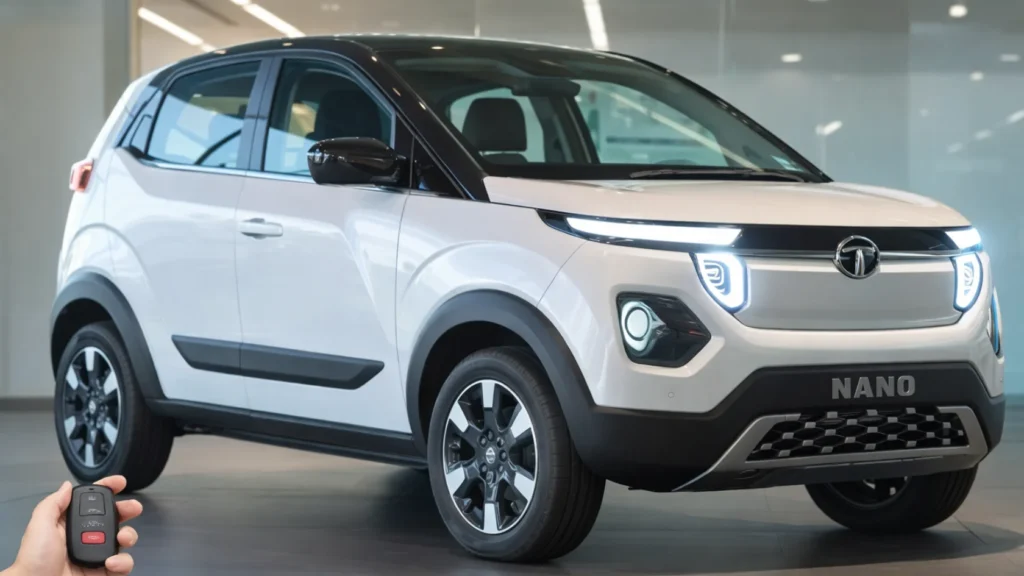
Platform Design and City Practical Layout
If built as compact city EV platform, overall length would likely stay near 3.2 to 3.4 meters for easy parking and narrow road driving. Ground clearance would likely remain near 165–175mm for Indian road conditions including speed breakers and semi-urban roads. Lightweight body construction would likely be used to improve driving range efficiency. Cabin layout would likely support 4 passengers for daily city and short highway travel.
Battery Pack and Real Driving Range
If 250Km certified range target is achieved, battery capacity would likely fall between 24kWh to 28kWh lithium battery pack. Real-world mixed driving range would likely stay near 180–220Km depending on AC usage, traffic conditions, and driving style. For average Indian daily usage of 30–40Km, charging frequency could remain once every 4–5 days for most families.
Motor Power and Performance Reality
Expected motor output would likely fall between 35kW to 45kW for city and light highway performance balance. This would allow smooth city acceleration and comfortable 70–90Km/h cruising. Top speed near 95Km/h would make the car usable for occasional highway travel while keeping efficiency high. Torque delivery would focus on smooth low speed city driving comfort.
Charging Time and Home Charging Setup
Standard home AC charging would likely support full charging in roughly 6–8 hours depending on battery capacity. If DC fast charging support is included, 20–80 percent charging could happen in roughly 45–60 minutes. Overnight home charging would likely remain primary charging method for most buyers.
Features and Safety Expectation
If positioned as ultra affordable EV, expected features could include digital instrument display, basic infotainment system, reverse parking sensors, and power steering. Safety hardware could include dual airbags, ABS with EBD, and stability control in higher variants. Premium luxury features would likely be limited to maintain low price target.
Price and EMI Reality
If expected ex-showroom price stays near ₹4.5 lakh, on-road pricing could fall near ₹5.10–₹5.70 lakh depending on state and insurance cost. With ₹25,000 down payment, loan amount could stay near ₹4.90–₹5.40 lakh. On long tenure loan, EMI near ₹3,999 per month could be achievable depending on interest rate and finance partner. Running cost could remain near ₹1.0–₹1.3 per km depending on electricity tariff.
Disclaimer: This article is for informational and expectation-based analysis. Final specifications, pricing, range, EMI structure, and launch details may vary based on official company announcements and market conditions. Buyers should verify final details from authorised dealers before purchase decisions.